

























How Online Coding Classes Teach Logic, Not Just Code
This blog explains how online coding classes help children develop logical thinking skills by teaching them to break down problems, follow structured steps, and create solutions through code. It highlights how coding enhances reasoning, improves focus, and builds a strong foundation for problem-solving—not just in tech, but across all areas of learning.

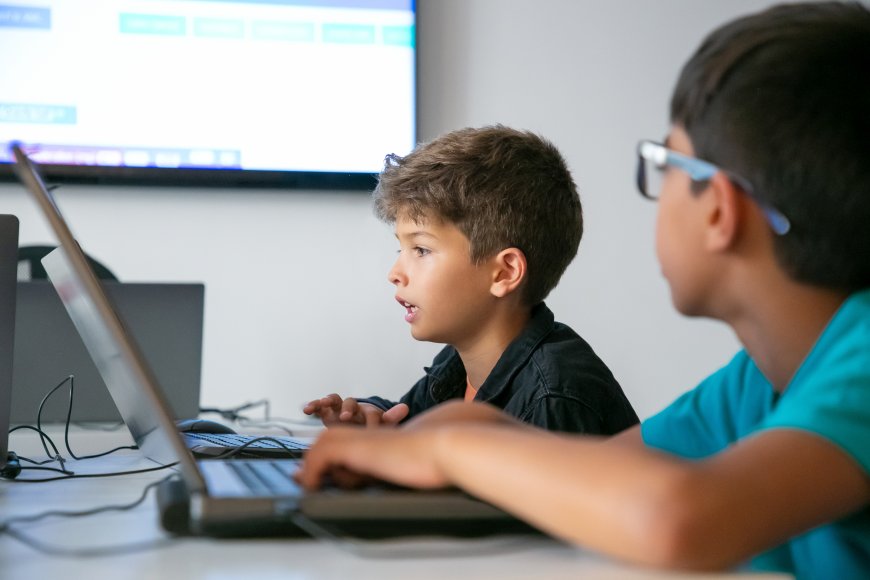
When most people hear the word coding, they immediately think of complicated lines of syntax, strange symbols, and hours spent in front of a screen. Its no surprise then that some parents feel intimidated by the idea of introducing their children to programming. But heres the truth: learning to code is not just about writing code. At its heart, its about developing logical thinking, a skill that serves kids far beyond the world of computers.
Today, online coding classes are growing in popularityand for good reason. These programmes are not only teaching kids how to create games, apps, and websites but also how to think clearly, break down problems, and approach challenges in a structured way. Logic is the real superpower being taught, and its something every child can benefit from, whether or not they grow up to be software engineers.
Lets take a deeper look at how online coding classes for kids build logical thinking and why it matters more than ever in the 21st century.
Why Logic Matters More Than Ever
We live in an increasingly complex world. From solving school assignments to navigating digital spaces, kids today face a barrage of information and problems. In such a scenario, being able to think logically and analytically is no longer a niche skillits essential.
Logic helps children:
-
Identify patterns
-
Break down complex tasks into manageable steps
-
Understand cause and effect
-
Make informed decisions
These skills apply to almost everything: maths, science, reading comprehension, and even social interactions. When kids learn to think logically, they gain confidence in solving problems on their own. Thats where coding comes in.
Coding: A Playground for Logic
At its core, coding is the art of giving instructions to a computer in a way it understands. But to do that effectively, one has to think like a computerlogically, step-by-step, with no room for ambiguity.
Lets say a child is creating a simple game where a character jumps over an obstacle. To make it work, they need to define:
-
What happens when a key is pressed
-
What counts as a collision
-
What should happen after that collision (restart, lose points, etc.)
-
How and when to update the game screen
Each of these decisions requires logical reasoning. Kids learn to:
-
Break the problem into smaller parts
-
Sequence actions correctly
-
Use if-then statements (conditionals)
-
Create loops to repeat actions
-
Debug when things dont work as expected
This is the same kind of thinking that helps with solving maths problems, writing essays with strong arguments, and navigating real-world decisions. Coding teaches logic by designkids cant create working programmes without thinking logically.
Online Platforms Make Logic Engaging
One of the biggest advantages of online coding classes for kids is how interactive and engaging they are. Traditional logic trainingthink puzzles, riddles, or logic worksheetshas its place, but coding adds a whole new layer of fun and application.
Many online platforms use visual programming tools like Scratch, Blockly, or drag-and-drop interfaces that make coding accessible even to kids who havent learned to type properly yet. These tools let children see the results of their logic in real time. If they mess up, the character might not move as intendedor may not move at all. This instant feedback loop is one of the most effective ways to teach logical reasoning.
Example: Scratch and Logic
Take Scratch, for example. Its a popular coding platform used in many online coding classes. Kids drag and snap together coding blocks that represent actions, conditions, and loops. Want your sprite to move when you press the spacebar? You need an event block, a movement block, and maybe a condition that says if touching the edge, bounce.
In the process, kids are writing code without even realising itand learning fundamental logic principles at the same time.
Project-Based Learning Boosts Logical Thinking
Many coding classes are structured around projects: games, stories, animations, apps. This project-based approach means children dont just learn code in isolation. They learn how to apply logic to real goals. Theyre motivated to solve problems not because theyre told to, but because they want their project to work.
As they build more complex projects, they naturally begin to understand deeper logical structuresnested loops, conditions within conditions, event-driven programming. They start to think like designers and engineers, not just users.
Coding Logic vs. School Logic
Another reason why online coding classes are so effective is that they complement and even enhance academic subjects.
-
Maths: Coding reinforces concepts like variables, functions, and patterns.
-
Science: It introduces kids to systems thinking, sequences, and experimentation.
-
Language: Writing code is similar to writing storiesit requires structure, order, and clarity.
The difference? Coding makes logic visible. Kids can immediately see what works and what doesnt. If a variable is wrong, the program fails. If a condition is miswritten, the animation doesnt play. This instant feedback helps children learn faster and better.
In contrast, school logic can sometimes feel abstract or disconnected. With coding, logic is alive.
Coding Builds a Growth Mindset
Logic alone isnt enoughyou need the resilience to try, fail, and try again. Coding teaches this naturally. No one writes a perfect program on their first trynot even professionals. Kids quickly learn that errors (bugs) are part of the process, and fixing them (debugging) is part of the fun.
This builds:
-
Patience: They know it might take time to fix a problem.
-
Persistence: They try different solutions instead of giving up.
-
Confidence: They realise they can figure things out on their own.
These are lifelong skills that go far beyond the screen.
Preparing for a Digital Future
The world is changing, and digital literacy is becoming a core requirementnot a bonus. But digital literacy doesnt just mean knowing how to use apps. It means understanding how they work, how to question their design, and how to think critically about the tools we use every day.
Teaching kids to code gives them that edge. And more importantly, teaching them the logic behind the code gives them the confidence to lead in a tech-driven world.
Whether your child becomes a scientist, artist, entrepreneur, or journalist, logical thinking will help them stand out. It sharpens their decision-making, creativity, and ability to work with others.
Enrolling them in coding classes for kids isnt just about preparing them for tech careersits about preparing them for life.
Final Thoughts
Online coding classes are doing something remarkable. Theyre not just preparing kids for future jobstheyre shaping how they think. By making logic fun, interactive, and hands-on, these classes are teaching children skills that will stay with them for life.
In a world where AI, automation, and digital tools are everywhere, its not enough to be a passive consumer of technology. Kids need to understand the logic behind it all. And that starts with coding.
So if youre still wondering whether an online coding course is worth it, remember this: its not just about the codeits about cultivating a mindset. One that questions, analyses, creates, and grows. Give your child the gift of logic, and youll be giving them a skill that lasts a lifetime.